
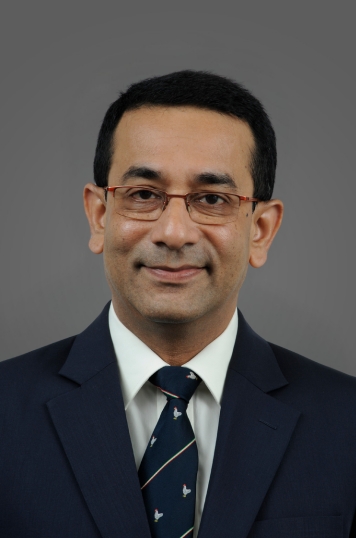
Former Head – Corporate Communications, Tata Trusts
The Future of Public Relations
The function of Corporate Communications will play a seminal role.
In the coming decades, individuals, acting first in tiny cohorts and then in large social sub-groups and groups, will even more increasingly shape trends and issues, in contrast with today when institutions — in the form of society bodies, governments, political entities — spark movements.
Secondly, digitalisation brings speed — more the digitalisation, more the speed.
These two paradigms pose imperatives for communicators.
Reading minds and data, almost at the level of each individual, will be critical. The Communications function should be among the most penetrating radars of an organisation. It should be able to pick up signals, even before they have become factor-advantages or issues, and prepare the organisation to leverage. So, technologies and tools that allow insight capture will be influential in PR’s effectiveness. I reckon that AI and shared media tools will certainly be among them.
Digitalisation-led speed will make news cycles even more instantaneous. So, reputation management will require matching speed of action, depending upon the scale and visibility of the organisation. A one-country organisation has a level of visibility and risk; a multi-country organisation has an entirely different — much higher — level of visibility and risk. I think the way to ensure blemish-free reputation is three-fold: a) being on the top of digital and shared media, and emerging AI tools for intelligence gathering and intervention b) a deeply networked organisation, in which the Communications team has a 24X7 alert web of internal contacts at every nook and corner of the organisation, and also the ear and the trust of the CEO c) and, third, a collective cerebral quality in the Communications team to interpret intelligence, suggest strategy and tactics to the CEO, and then implement the decided action by itself through its own external network and/or external agencies.
Ultimately, it is the practitioners who will make a difference between one organisation and another.