
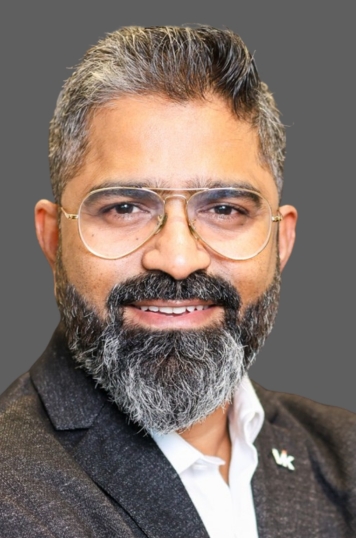
Vikram Kharvi is the CEO at Bloomingdale PR
The audience for your reputation is no longer human
For most of my 29 years of experience, PR had one job. Tell a company’s story to people. Readers, viewers, customers, voters. We chased journalists because journalists reached the people who mattered.
That world is ending. Not because machines now write press releases. Because of who decides what a business is allowed to say, sell, and earn.
Look at where Indian business is heading. A company’s fate is increasingly settled by parties that never read a press release. A bank’s risk model. A foreign investor screening for exposure. A ratings engine. A government portal. Soon, an AI agent doing the customer’s buying for them.
These are the new audiences. They are not human. They judge a company by its trust signals, not its tagline.
In five years, the biggest threat to an Indian firm will not be a bad article. It will be an invisible downgrade. A score that quietly raises your cost of capital. A platform that buries you. An assistant that skips you because your reputation data is thin.
So PR shifts from persuasion to verification. Less time placing stories. More time making a company legible and trustworthy to systems that read everything and forgive nothing.
Three forces make this urgent.
First, capital now asks moral questions. Governance, supply chains, ESG. Money interrogates a company before it funds it. Reputation is priced into financing.
Second, geopolitics has entered the boardroom. An Indian firm sourcing from China, selling to America, hiring in the Gulf lives inside three sets of politics that disagree. One loose sentence becomes a trade problem. We now manage reputation across borders that contradict each other.
Third, the customer is being replaced by a delegate. People will ask a machine to choose for them. That machine reads filings, lawsuits, reviews, and news at a scale no human can. If your trust footprint is weak, you lose before a person ever sees you.
What, then, does the PR professional of 2030 actually do?
We become the trust engineers of the business. We make the company say the same true thing everywhere, to the regulator, the investor, the algorithm, the activist, and the customer. We close the gap between what a company claims and what its data shows. That gap is now searchable.
The craft still matters. Words still matter. But charming one editor is becoming a small part of a far bigger job.
Here is the uncomfortable truth for my own profession. If we keep defining ourselves by media coverage, we will be measured by something that is dying. If we redefine ourselves as the keepers of a company’s trust across every audience, human and machine, we become impossible to remove.
The press release had a reader. Your reputation now has a processor.
Plan for it.